
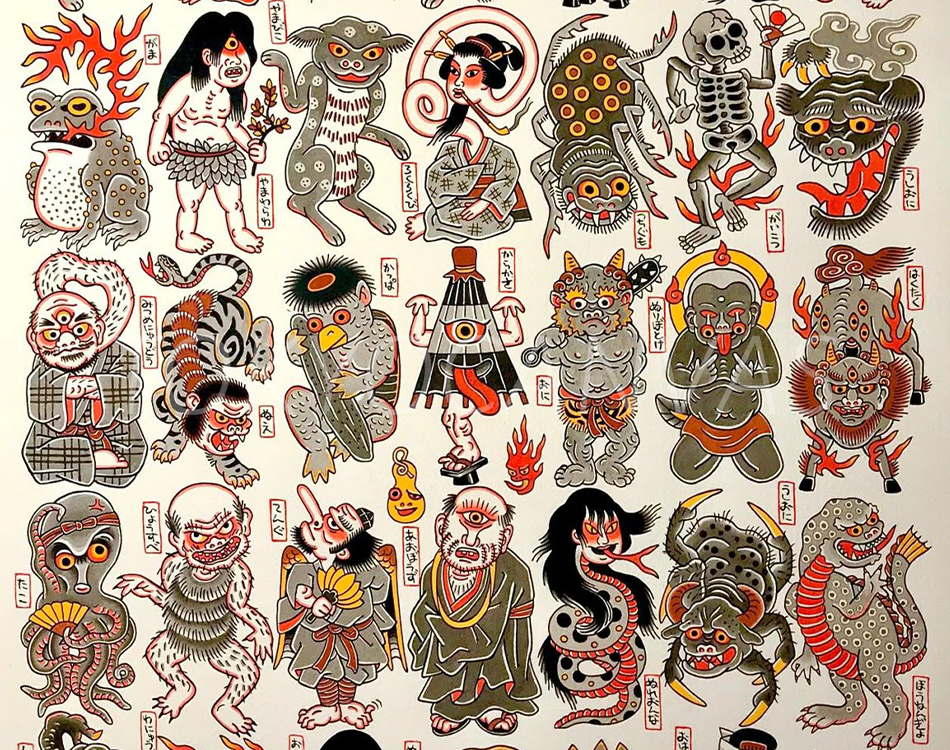
As mental health awareness peaks and algorithm fatigue hits record levels in 2025, millions are quietly turning to centuries-old Japanese folklore for comfort. A simple washed T-shirt with a kappa or red oni is currently the fastest-selling graphic on independent clothing sites worldwide.
1.Yokai as Emotional Honesty Modern life demands constant positivity, but yokai never pretend to be perfect.
- Playful yet dangerous: Creatures like the kappa reflect the same contradictions people feel daily—friendly one moment, overwhelmed the next.
- Visible inner monsters: Wearing a spirit on soft, faded cotton has become a low-key way to say “I’m not always okay,” without needing words.
2.Folklore Over Algorithms People are exhausted by content that belongs to corporations.
- 400-year-old stories: Yokai prints carry no trademark, no sponsored hashtag—just pure narrative that survived centuries.
- Cracked, sun-faded prints: The heavier the garment wash, the more the design looks like it walked out of an Edo-period scroll. Imperfection feels authentic in 2025.
3.The 2025 Comfort Shift Today’s favorite yokai tees are pre-washed three times, slightly oversized, and feel broken-in from day one.
- Built to age well: The cotton softens and the print gently cracks with every wash, mirroring how ancient stories improve with retelling.
- Daily armor: In a year of uncertainty, a soft T-shirt carrying an old spirit has become quiet protection against digital noise.
The Human Folklore A faded yokai on cotton isn’t costume—it’s recognition. These spirits have watched humans struggle for centuries and never judged. In 2025, wearing one feels less like fashion and more like borrowing a very old friend who already understands.