
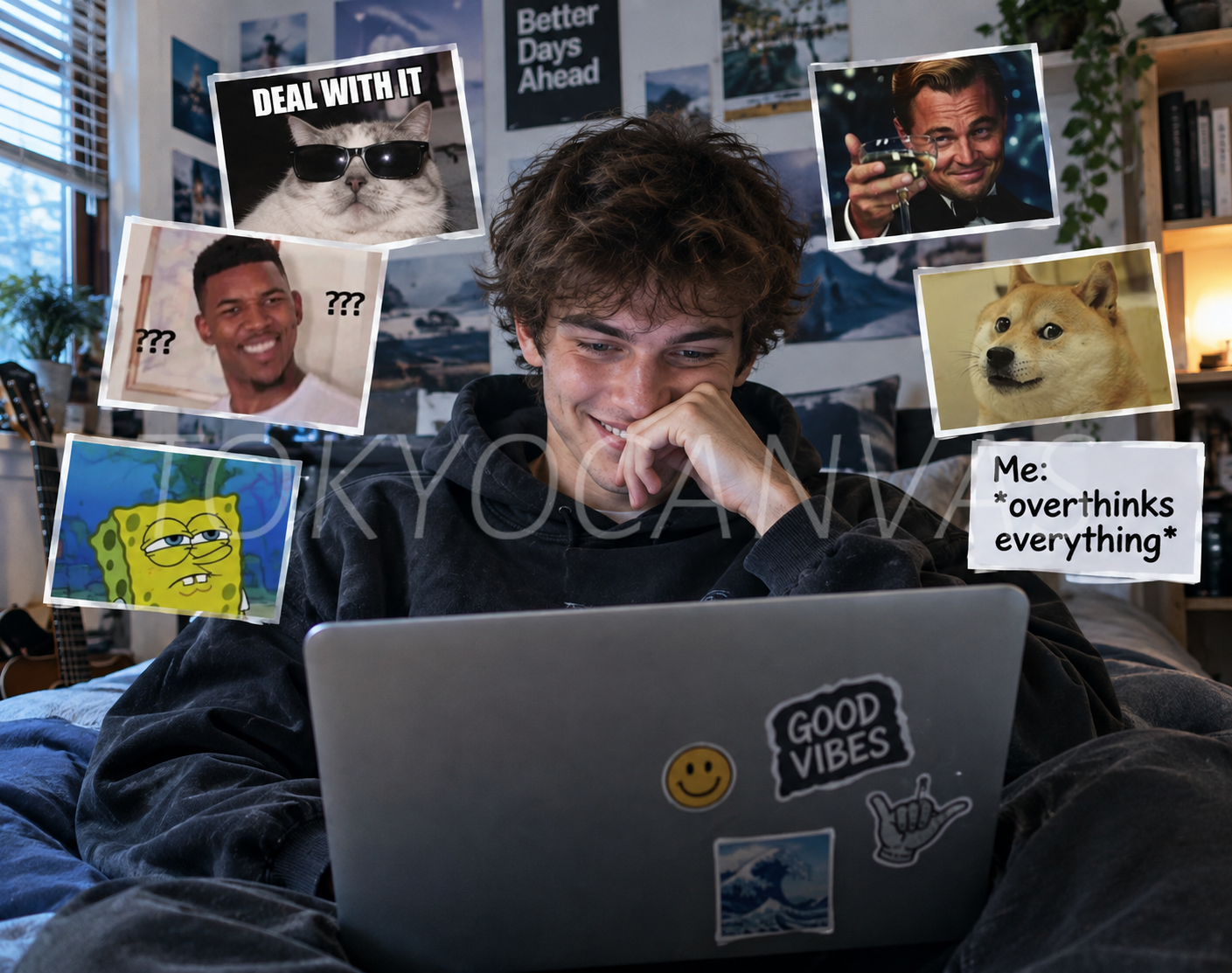
If you spend any time online, you probably communicate with memes without even thinking about it. A funny image, a short video, a reaction, or even a completely random picture can sometimes say more than a full paragraph. For younger internet users, memes are no longer just jokes. They have become a quick, flexible way to express emotions, share experiences, and let other people know, “Yep, I get it.” In a world where online conversations move faster than ever, meme culture is starting to feel less like entertainment and more like a language of its own.
1. Memes Can Say What Words Can't
One reason memes work so well is that they communicate emotions almost instantly.
Instead of typing “I have absolutely no idea what is going on,” someone might simply send a confused reaction image. Instead of explaining that something is painfully awkward, a single meme can capture the feeling perfectly.
The meaning often depends on context. The same image can express excitement, disappointment, confusion, sarcasm, or pure disbelief depending on how it is used.
That makes memes surprisingly flexible. They are not really about the picture itself. They are about the shared feeling behind it.
2. Meme Culture Creates Shared Experiences
Memes also give people a sense of belonging.
You might see a meme about being tired after work, pretending to understand something, spending too much money on something unnecessary, or trying to look productive while doing absolutely nothing.
The humor works because the experience feels familiar.
This is especially common among younger adults, who spend a huge part of their social lives online. Memes create small moments of recognition between strangers: “You understand this? Same.”
In that sense, memes function almost like inside jokes shared by millions of people.
3. Internet Humor Is Becoming Part of Everyday Life
Meme culture is no longer limited to social media. Its style has started influencing conversations, fashion, entertainment, and everyday expressions.
People use exaggerated humor, random references, reaction images, and intentionally ridiculous phrases in normal conversations. Even clothing can become part of the joke, with funny graphics and playful designs turning personal style into another way to communicate.
The interesting part is that meme culture keeps changing. A joke can become popular, disappear, and return in a completely different form months later. There is no official dictionary, and nobody decides exactly what a meme means.
That is probably what makes meme culture so fun. It is constantly evolving, shaped by the people using it.
In the end, memes may not replace traditional language, but they have definitely added a new layer to how people communicate. Sometimes a few words are enough. Sometimes an image says everything. And sometimes, honestly, a completely ridiculous meme is the only appropriate response.