

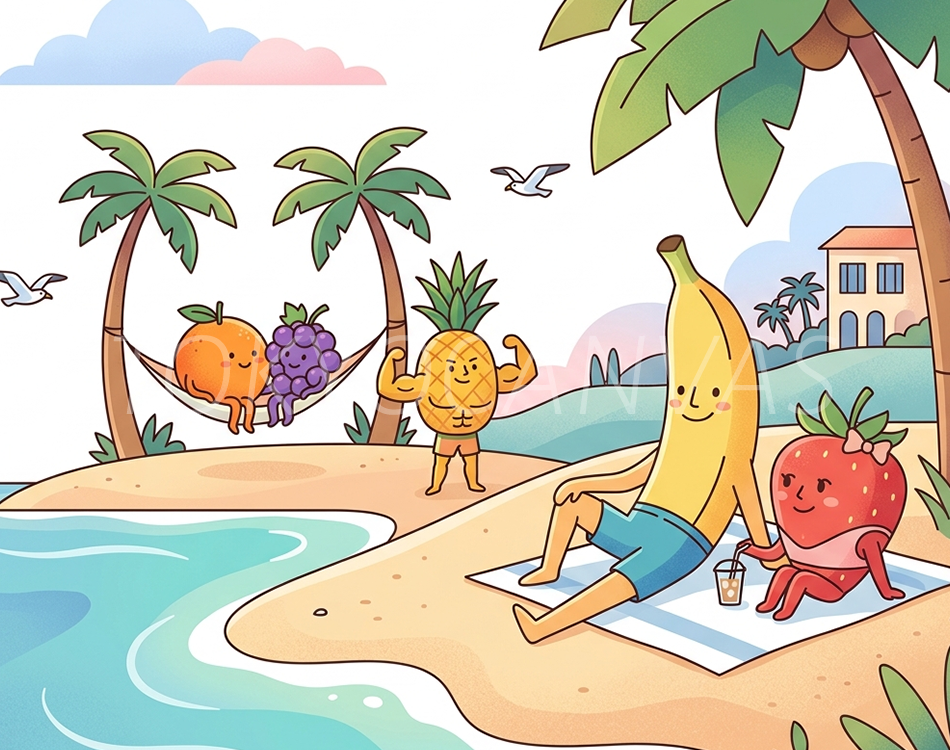
Meet Bananito and the gang: Why 300 million people watched AI fruit fall in love.
Just when we thought we’d seen everything, TikTok delivered Fruit Love Island. It’s a reality show, it’s a soap opera, and every single contestant is a piece of anthropomorphic fruit. Within weeks, this AI-generated series became one of the fastest-growing accounts in social media history.
1. The Concept: Reality TV, But Juicy
The premise is a direct parody of Love Island. A group of "sexy" fruit characters—like a buff banana named Bananito or a dramatic strawberry—live in a villa and try to find their soulmates. The episodes are short, vertical, and packed with "AI slop" charm. Despite (or perhaps because of) the slightly uncanny animation style, the drama is surprisingly addictive, featuring everything from "Casa Amor" betrayals to secret fruit pregnancies.
2. The Power of Participatory Content
Why did this go so viral? It wasn’t just the novelty of seeing a pineapple argue with a grape. The creator, ai.cinema021, used a "participatory" model. Viewers could vote in Google Forms to decide which fruits should be "dumped" from the island or who should couple up next. This made the audience feel like they were executive producers of a digital fever dream, driving engagement numbers that traditional TV networks would envy.
3. The Future (and Risk) of AI Entertainment
"Fruit Love Island" represents a new era of "micro-dramas." These shows are cheap to produce, infinitely scalable, and can react to trends in real-time. However, it hasn't been without controversy. From copyright concerns regarding the Love Island format to the "mass reporting" that eventually led to some episodes being removed, the series is a case study in the "Wild West" of AI content. Whether you love it or find it "brain rot," it’s clear that the era of AI-generated reality stars has officially arrived.