

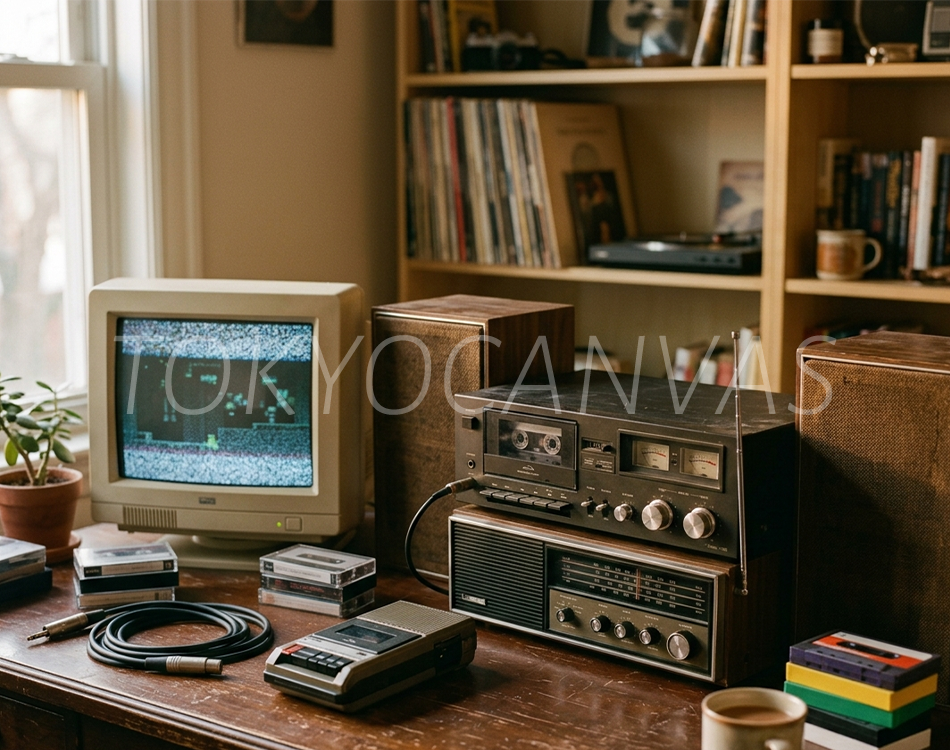
In a world dominated by ultra-fast streaming, touchscreens, and pristine automated algorithms, a quiet rebellion is taking place on our shelves and desks. Young collectors and music enthusiasts are turning their backs on modern convenience to hunt down clunky, tactile, and imperfect gadgets from the late 20th century. The resurgence of lo-fi electronic antiques is more than a passing aesthetic fad; it is a profound shift toward meaningful, sensory interactions with the technology we use every day.
1. The Allure of Analog Friction
Modern devices are designed to be seamless, hiding their inner workings behind smooth glass interfaces. Electronic antiques—like portable cassette players, 8-bit pocket synthesizers, and bulky cathode-ray tube monitors—offer the exact opposite: delightful friction. There is a distinct, satisfying physical feedback in clicking a heavy plastic play button, turning a weighted radio dial, or watching a physical tape reel spin. This tactility forces us to slow down and engage with media intentionally, rather than mindlessly swiping through endless digital options.
2. Embracing the Beauty of Imperfection
For years, tech development chased flawless clarity, but creators are realizing that perfection can feel sterile. The current lo-fi movement celebrates the unique flaws of vintage hardware. The gentle hiss of a magnetic cassette tape, the warm harmonic distortion of an old desktop pre-amp, and the blocky, dithered patterns of early digital cameras provide a texture that modern software struggles to replicate. Musicians and visual artists are integrating these "antiques" into their workflows precisely because their technical limitations breed authentic creativity.
3. Sourcing History and Sustainability
Beyond the sound and style, collecting vintage tech carries a strong environmental and historical appeal. In a culture driven by planned obsolescence, rescuing a 30-year-old piece of audio gear from a thrift shop and restoring it to working order feels like a small victory against electronic waste. These gadgets were built to be opened, repaired, and kept for decades. By integrating these storied, durable machines into our contemporary spaces, we add a layer of historic warmth and soul to an otherwise sterile digital lifestyle.