
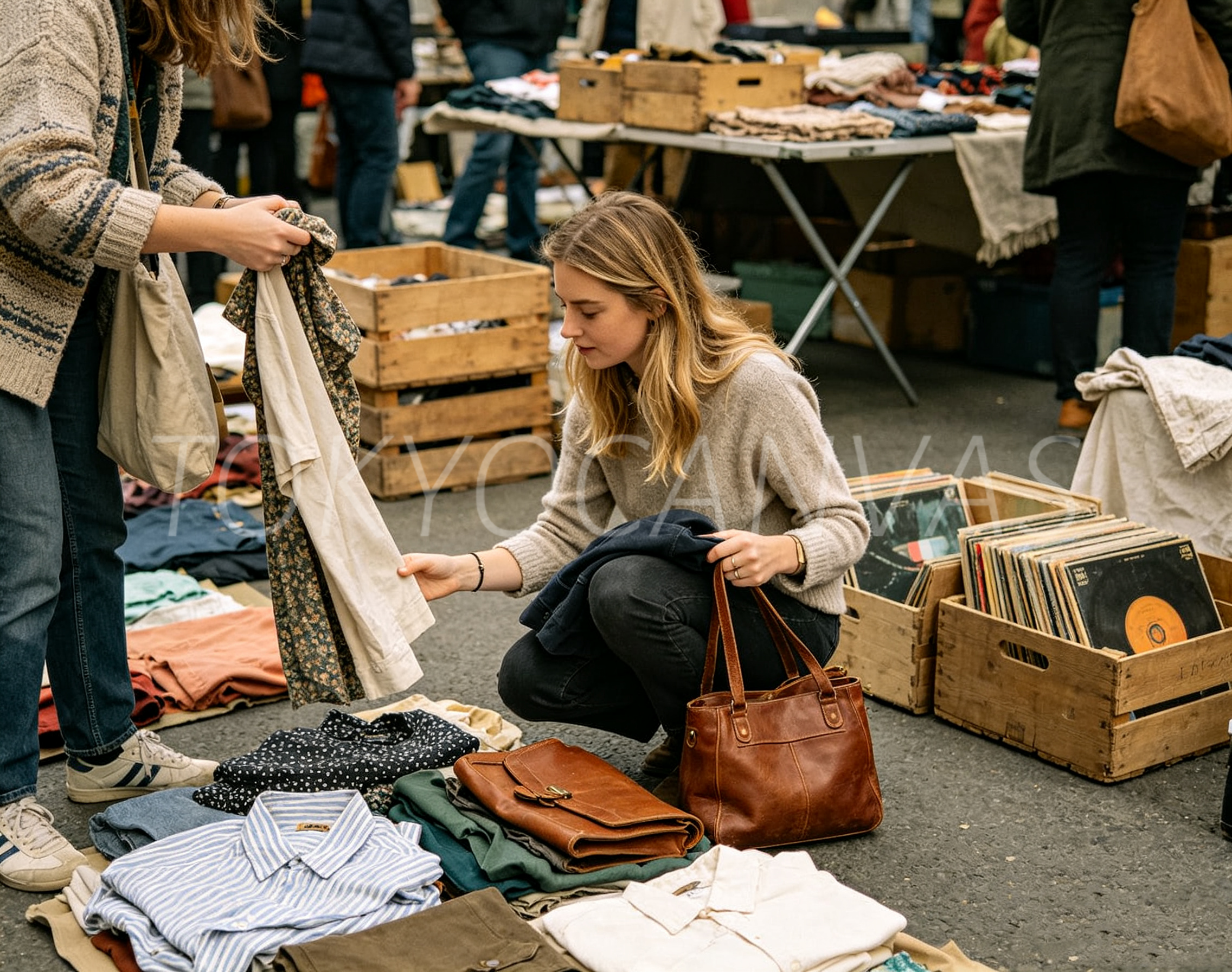
If you scroll through social feeds lately, you will notice a rising cultural shift. Young people are turning second‑hand shopping into a recreational weekend activity known as “Secondhand Sidequest”. Borrowed from gaming vocabulary, a sidequest means an optional, fun detour instead of a strict main goal. For 18‑30‑year‑olds, visiting second‑hand shops and flea markets is no longer only about saving money. It becomes a low‑pressure adventure, a social hang‑out, and a way to build personal style away from mass‑produced trends. There are three core reasons behind this growing cultural phenomenon.
- The thrill of unpredictable discovery Unlike online shopping with filters and search bars, second‑hand hunting offers zero guarantees. You dig through crowded racks without knowing what you will find. One trip might reward you with a perfectly‑fitted vintage top, while another gives you nothing worthwhile. This uncertainty creates genuine excitement. Many young people go out for the hunt itself, not just to grab specific items. The happy surprise of scoring a one‑of‑a‑kind piece delivers satisfaction that standard retail cannot match. Even empty‑hand trips still count as a fun casual sidequest with friends.
- Building real, individual personal style Mass‑produced clothing pushes identical looks across social media feeds. A lot of young adults feel tired of wearing the same outfits as thousands of others. Second‑hand goods carry history and character. Each pre‑loved item holds subtle marks from its previous owner. Mixing old finds with everyday pieces helps people craft looks that truly reflect their personality. It lets them step outside viral fashion cycles and dress for themselves, not for algorithm‑driven trends. Individuality stands as one of the biggest draws for this community.
- Community‑driven casual weekend culture Secondhand Sidequest has grown into a shared social ritual. Groups of friends meet up, wander market stalls, browse racks together, joke about bad finds and celebrate great discoveries. Short clips of these thrift trips circulate widely online, building a friendly community around the hobby. It also aligns with many young people’s desire for mindful consumption. Choosing pre‑owned items feels like a small, meaningful choice against endless fast‑cycle consumption. More than shopping, it is a relaxed offline escape from screen time.
Secondhand Sidequest shows how modern youth re‑imagine leisure. It is not about perfect purchases. It celebrates detours, luck, uniqueness and real‑world fun. In an over‑digitized world, this low‑stakes treasure‑hunting culture will keep resonating with young generations.